
Many learning courses start with a slide that lists learning objectives or briefly describes what the course will cover. But the first slide should do more than explain the content — it should show the learner what they will gain and make them curious to continue. There are several ways to frame that value, and choosing the right one helps set the direction for the whole course.
The opening slide sets the perspective
The first slide does more than introduce the topic. It sets the perspective from which the learner will interpret everything that follows.
The same course can feel very different depending on how it begins. One opener may highlight the results the learner will achieve. Another may focus on professional responsibilities, a practical problem to solve, or the broader context in which the topic matters.
This initial framing shapes how the learner understands the purpose of the course and what they pay attention to as they move through it. When the opener is clear, the rest of the course feels more coherent and purposeful.
Treat the opener as a design decision!
When we begin writing a course, it is easy to fall back on a familiar structure: a title, a short description, and a list of learning objectives. But this is only one way to open a course.
In reality, there are several ways to frame the beginning of a course depending on the topic and the learner’s situation. The same content can be introduced through outcomes, responsibilities, problems, or the broader context in which the topic matters.
Choosing the opener deliberately helps position the course more clearly and makes the value of the course easier for the learner to understand from the start.
Seven ways to open an e-learning course
Once we treat the opening as a design decision, the next step is to choose the perspective from which the course will begin.
There is no single correct way to open a course. Different topics and learning situations call for different framing. Sometimes it makes sense to start with the results the learner will achieve. In other cases, it may be more effective to begin with a professional responsibility, a practical problem, or the broader context of the topic.
Below are seven common ways to frame the opening of an e-learning course. Each approach highlights the value of the course from a slightly different perspective.
1. Course overview
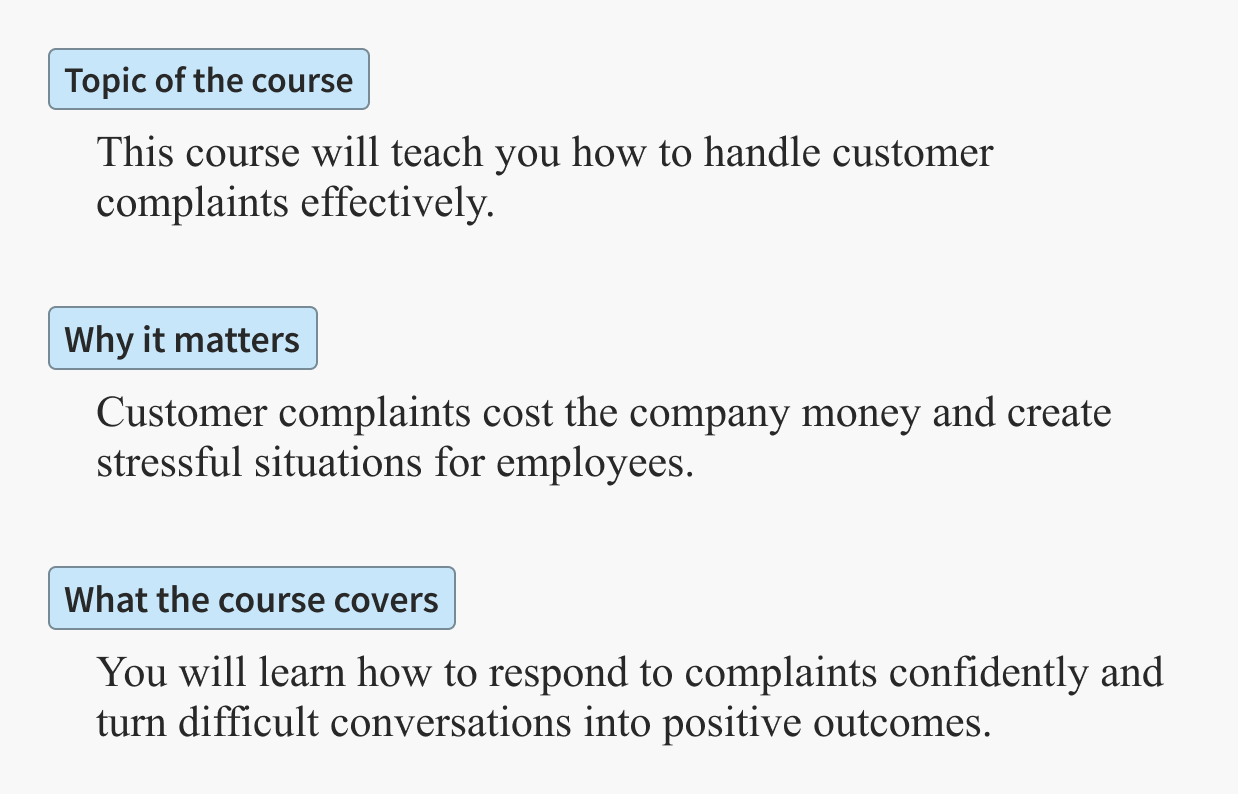
This is the most straightforward way to open a course. The first slide explains what the course covers, why it exists, and what the learner can expect from it.
The focus is on orientation. The learner quickly understands the scope of the topic and the purpose of the course before moving into the content.
This approach works well when the main goal is to introduce a subject, provide a structured overview, or guide learners through a clearly defined topic area.
2. Results-first
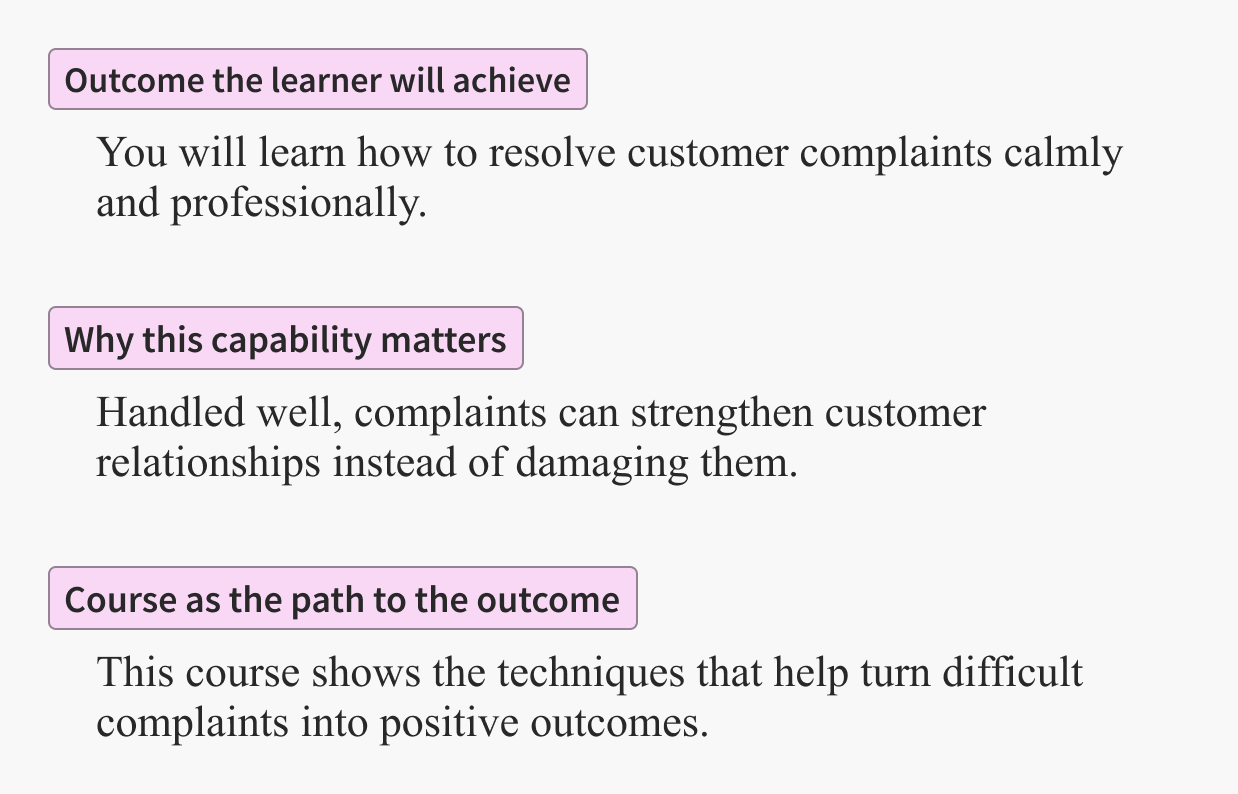
Skill-based courses work especially well with this approach, particularly when the value of the topic can be expressed through clear capabilities or performance improvements.
Start by highlighting what the learner will be able to do after completing the course. Instead of describing the content, focus on outcomes and position the course as the path to achieving those results.
3. Learning journey
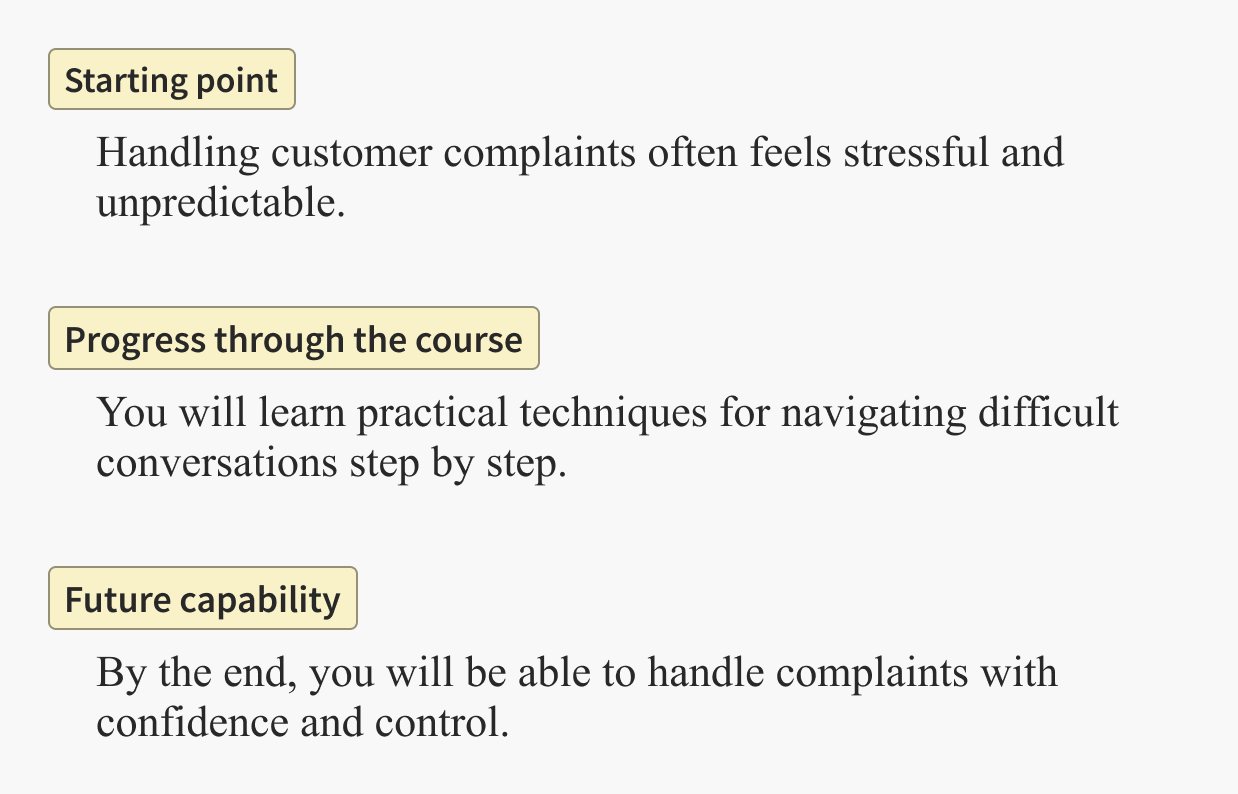
When a course represents a clear development process — or when the learner’s progress is itself part of the story — this framing gives the opening a natural shape.
Present the course as a progression from the learner’s current situation to a more capable future state. Rather than listing topics, frame the course as a structured path that helps the learner move from where they are today to where they need to be.
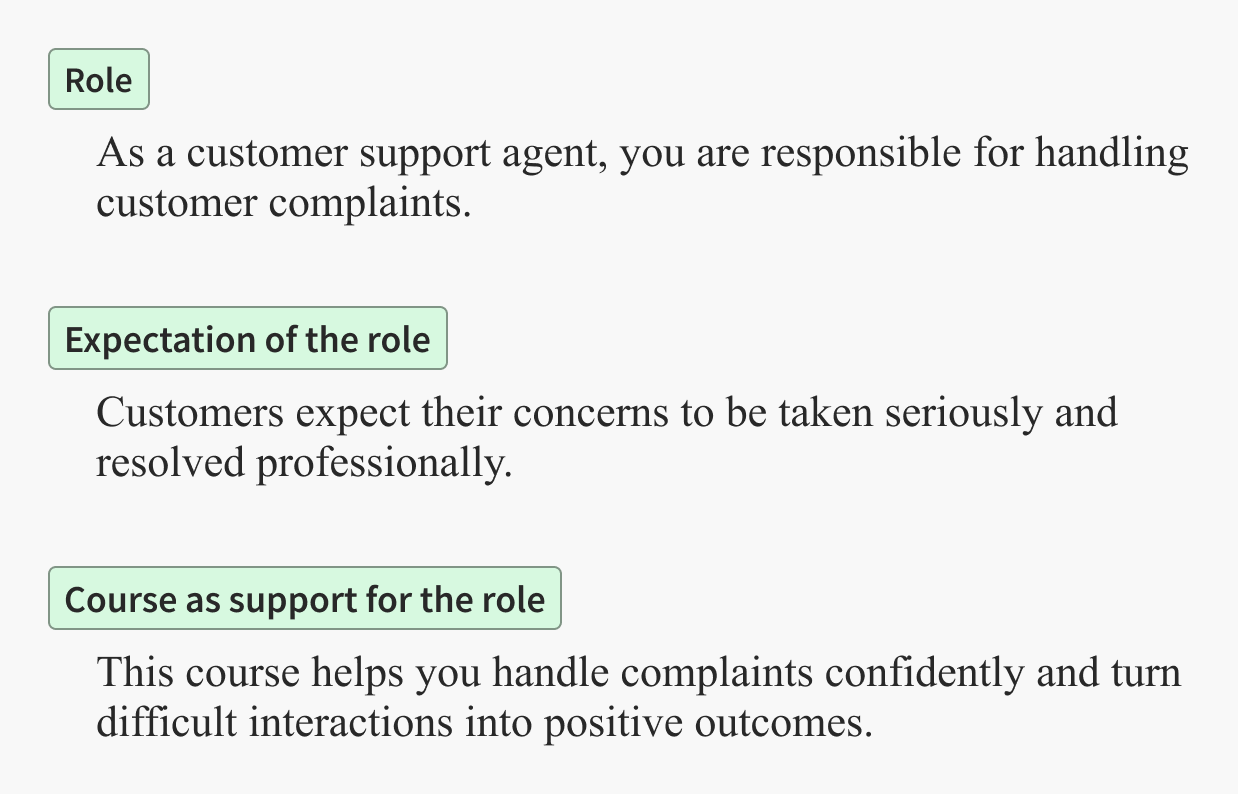
4. Role-based introduction
Role-specific training benefits from this approach when the connection between the topic and professional responsibilities is clear.
Begin by referring to the expectations associated with the role. The opening then positions the course as support for fulfilling those responsibilities effectively.
5. Real-world scenario
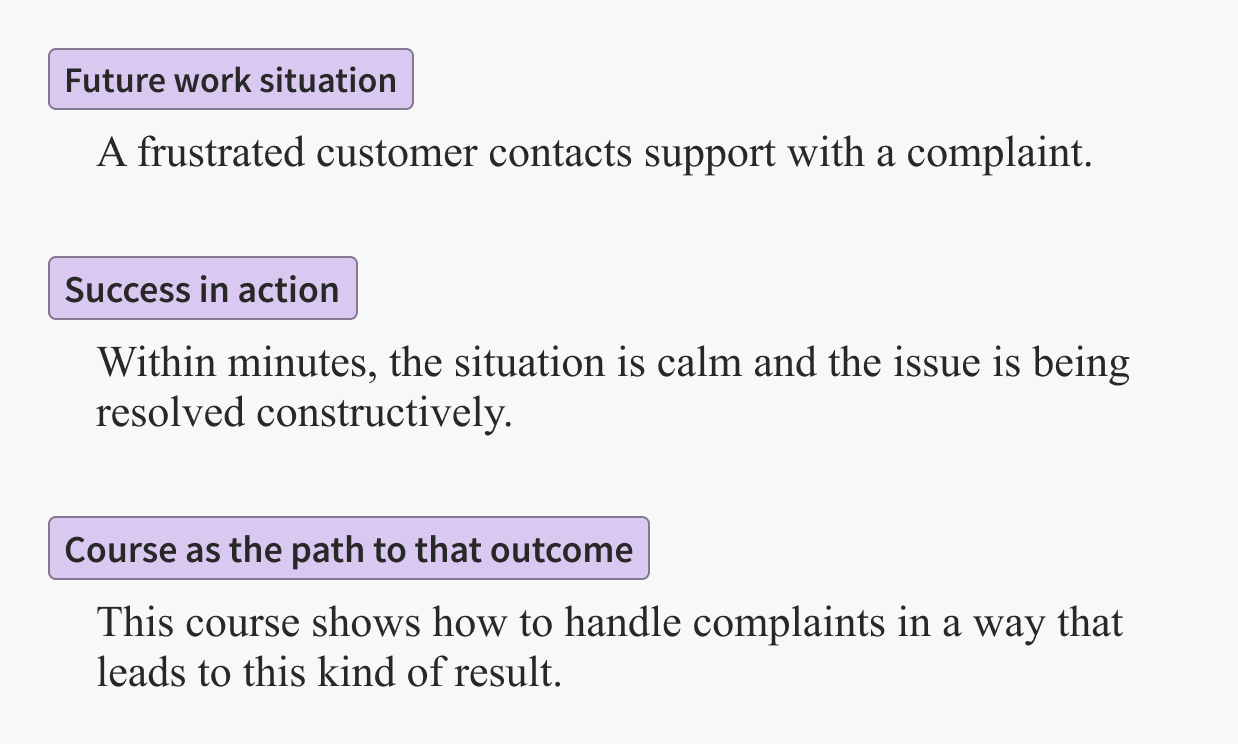
When it helps learners to picture how the knowledge will be applied in practice, this approach creates an immediate sense of relevance.
Start with a realistic situation in which the outcomes of the course are already being used successfully. After presenting this future state, position the course as the way to reach that state.
6. Risk-focused opening
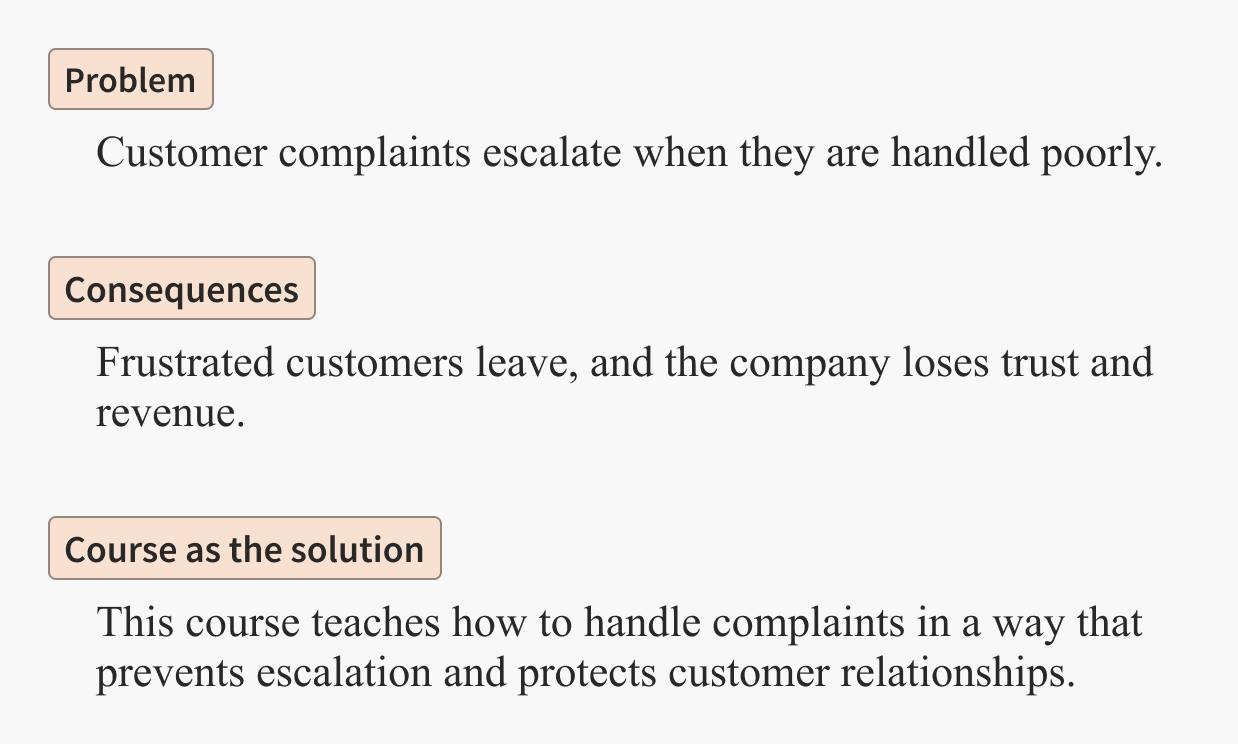
Safety, compliance, troubleshooting, and operational training are natural fits here — anywhere the topic’s relevance is tied to avoiding mistakes or managing risk.
Open with a concrete problem, error, or potential consequence. Then introduce the course as the way to prevent the issue or address the challenge.
7. Big picture context
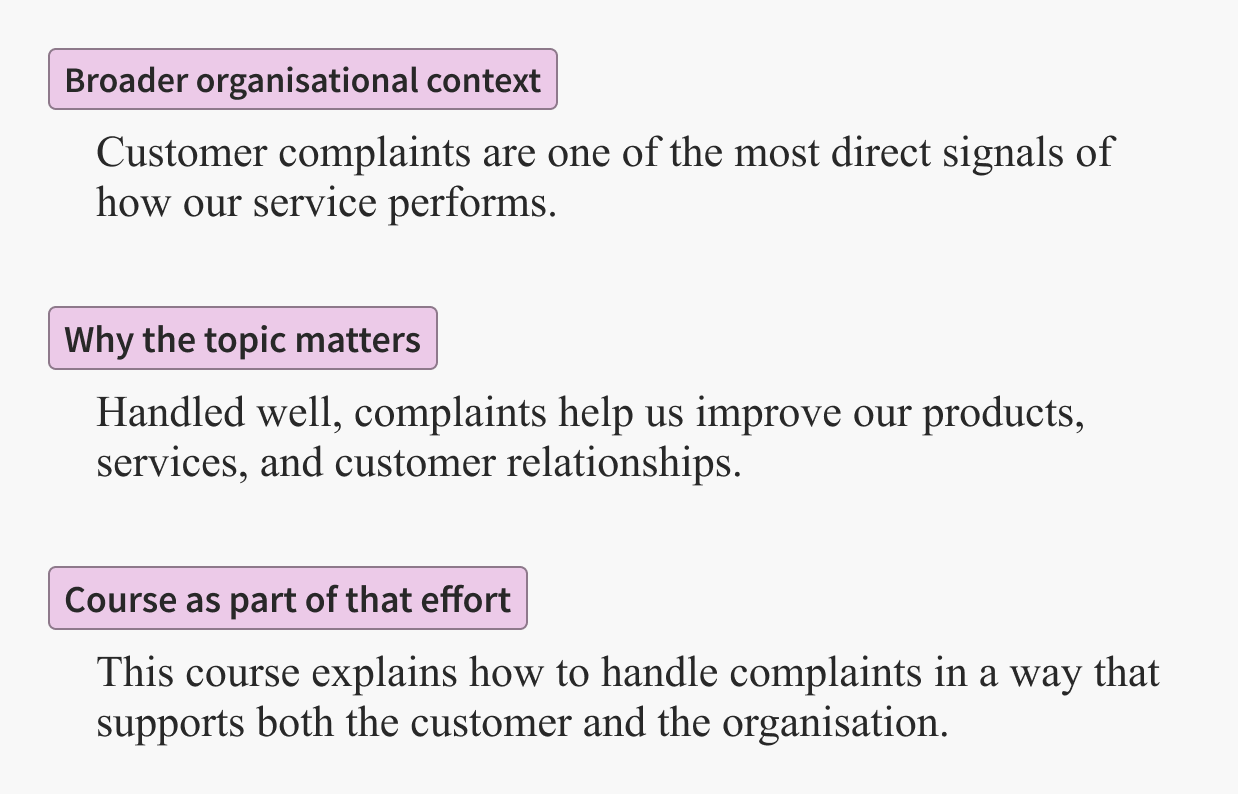
When learners need to understand how a topic fits into a larger system, process, or organisational effort, grounding the opening in the bigger picture can be effective.
Begin by describing the broader environment or objective related to the topic. The opening then positions the course as part of that wider context.
How to choose the right opener
The most suitable opener depends on the nature of the topic and the learner’s situation.
Skill-based courses often benefit from a results-first opening that highlights what the learner will be able to do after completing the course. When the main value lies in improved capabilities, starting with the outcome makes that value immediately clear.
Responsibility-driven topics often work well with role-based framing. Anchoring the opening in the learner’s role helps connect the course directly with expectations they already have in their work.
Safety, compliance, and operational training frequently benefit from a problem or risk opener. When the topic exists to prevent mistakes or manage consequences, starting with the risk makes the relevance of the course obvious.
In practice, there is no single correct approach. The key is to choose the framing that best communicates why the topic matters to the learner.
A good course opening is intentional
The first slide should not be treated as a formality or an afterthought.
When the opener is chosen deliberately, it establishes the direction of the course and clarifies what the learner should expect. The framing also helps the rest of the course stay aligned with the same perspective.
A well-designed opening creates a stronger connection between the learner, the topic, and the value of the course — right from the start.